
Ceuta Events: An Algerian Opened a Breach
The Spanish Supreme Court bans the “hot returns” of migrants intercepted at sea while attempting to reach Sebta or Melilla by swimming. This case law arose from the appeal of an Algerian national handed over to Morocco in 2024.
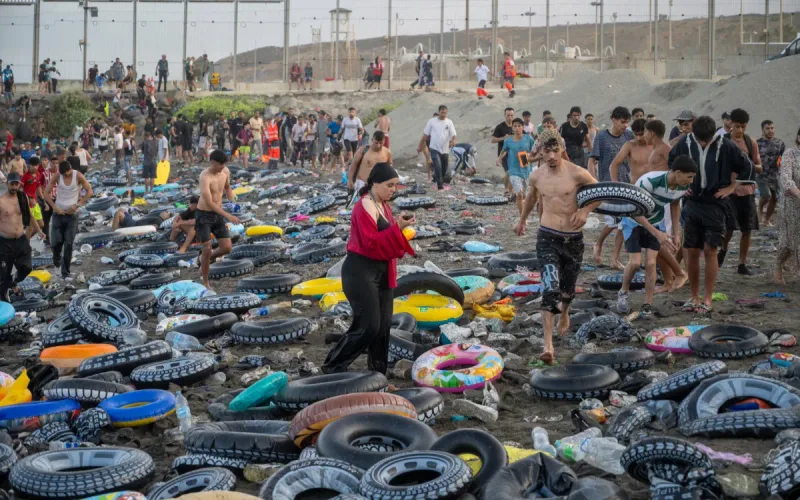
The case dates back to November 14, 2024. An Algerian national and two other people had been intercepted on the high seas while attempting to reach Sebta by swimming. The Algerian had immediately been handed over to the Moroccan authorities, without a formal decision, without a lawyer and without the possibility of requesting international protection.
On Bladi.net : Spain World Cup Victory Sparks Ceuta Migration Surge
A court in Sebta, followed by the High Court of Justice of Andalusia, ruled that this handover was irregular. The Spanish state appealed to the Supreme Court to defend the legality of this procedure.
In its decision of June 29, 2026, Spain’s highest court rejected the appeal. It held that “rejection at the border,” allowing for an immediate handover, concerns only people attempting to cross physical containment structures, such as the fences of Sebta and Melilla.
The Sea Is Not a Fence
For the judges, drones, thermal cameras and sensors used at sea serve to detect crossings, but do not constitute physical obstacles. A person intercepted while swimming therefore cannot be immediately returned under the exceptional regime applied to crossings of land barriers.
The Spanish authorities must now open a reasoned return procedure, with the assistance of a lawyer and an interpreter. The person concerned may also request international protection.
However, this decision does not grant migrants an automatic right to remain in Spain. It merely requires an individual assessment of their situation before any possible handover to Morocco.
On Bladi.net : Spanish Court Rules Algerian Migrant’s Expulsion to Morocco Unlawful
The Spanish Supreme Court specifies that the government could extend immediate rejection to maritime crossings if it were to install genuine physical containment structures at sea in the future.