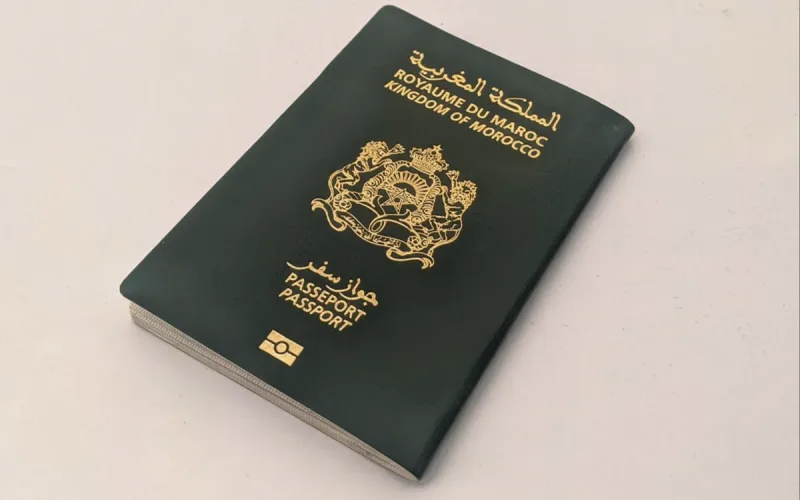
EES: Moroccan passports can complicate Franco-Moroccans’ return to Europe
With the EES now fully deployed at the borders of the Schengen area, a Franco-Moroccan who presents only their Moroccan passport may be checked as a third-country national before their French nationality is established. This complication can be avoided by using the correct document on the European side.
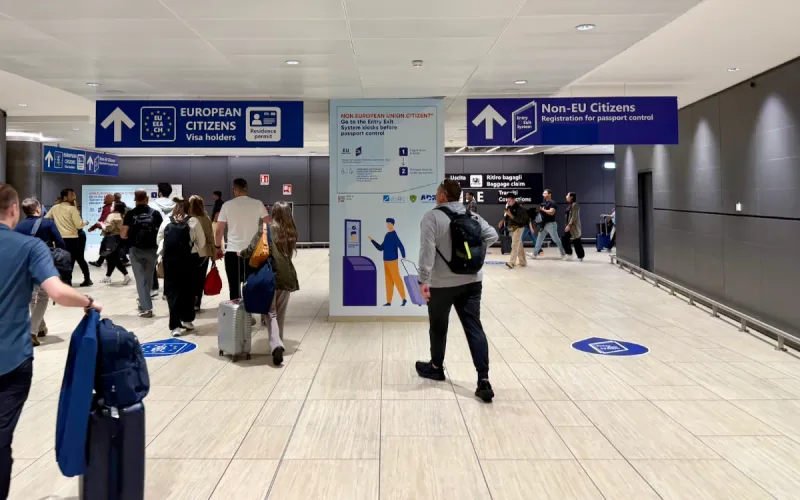
Since 10 April 2026, the European Entry/Exit System EES has been fully operational at the external borders of the Schengen area. It electronically records the crossings of the travelers concerned, along with their passport details, photograph and biometric data. The European Commission states that it notably makes it possible to calculate the length of stays automatically and identify overstays.
On Bladi.net : article 122445
But a Franco-Moroccan is not subject to these rules like an ordinary Moroccan traveler. Their French nationality makes them a citizen of the European Union, and the European Union excludes European citizens from the scope of the EES.
The difficulty may arise during the check when a dual national presents only their Moroccan passport. For the officer or the system, this document corresponds to that of a third-country national normally subject to short-stay rules. The traveler may then have to establish that they also hold French nationality for their actual status to be taken into account.
90 days for one, no limit for the other
The difference is significant. A Moroccan on a short stay in the Schengen area is subject to the 90-day rule within 180 days, a period that the EES records automatically. A French citizen, even if also Moroccan, is not subject to this limit by virtue of their stay in the Union.
Presenting their French passport or French national identity card at the European check from the outset therefore prevents a Franco-Moroccan from initially being treated under the regime applicable to Moroccan travelers. Their Moroccan passport naturally remains usable for their formalities in Morocco.
The EES also makes checks much less dependent on the passport presented alone. The document’s information is linked to biometric data, notably the face and, for the travelers concerned, fingerprints. Using another passport therefore no longer necessarily means appearing as a new traveler with no history.
On Bladi.net : Italy and Spain clash, Moroccans bear the brunt
In the event of an incorrect registration, European rules allow individuals to request access to, rectification of or erasure of the data concerned. But for Franco-Moroccans, the simplest precaution remains the same: at the European border, present directly the document proving their French nationality.