
Moroccans pay thousands of euros to work in Italy… then fall into the clutches of the “agromafia”
Some people recruited in Morocco to leave the country sometimes pay thousands of euros to obtain legal work in Italy. Once they are in debt, some discover that the promised job does not exist and become dependent on the same intermediaries who arranged their arrival.
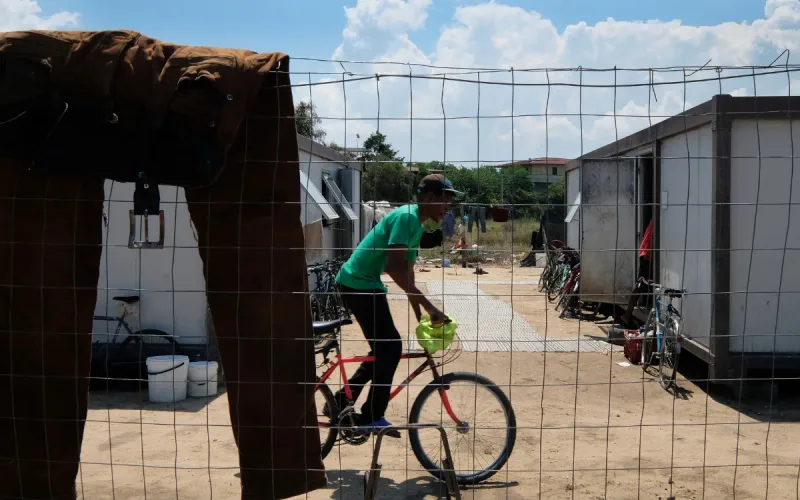
The Italian system for exploiting agricultural labor no longer necessarily begins in the fields. The networks responsible for recruiting workers now reach back to their countries of origin, particularly Morocco.
On Bladi.net : France: Moroccan Workers Paid 10,000 Euros to Work
This is what the Global Initiative Against Transnational Organized Crime (GI-TOC) describes in a new analysis devoted to organized crime’s grip on Italian agriculture. The organization explicitly cites Morocco among the countries where intermediaries seek future workers, alongside Pakistan, India and Bangladesh.
The promise made to applicants is particularly attractive: legally entering Italy to work through the “Decreto Flussi,” the mechanism that allows non-European workers each year to obtain authorization under the quotas set by Rome.
But accessing this promise can be very costly. According to GI-TOC, many applicants pay thousands of euros in commissions and intermediary fees. They thus begin their journey with significant debt, even before reaching Europe.
The promised job may never exist
The mechanism can go much further than a simple abusive commission. In 2024, Italian authorities dismantled a network that used the “click days” system, during which work permit applications are submitted online, to file thousands of fraudulent applications.
In this case, migrants allegedly paid up to 2,000 euros to obtain a place in the system. Once they had completed the procedure, some discovered that the company supposedly employing them had disappeared, could not be found or had never intended to give them work.
Without regular employment and with a debt to repay, workers may then find themselves dependent on the intermediaries who had arranged their arrival. It is at this stage that the promised legal recruitment can shift into “caporalato,” the clandestine labor-intermediation system particularly widespread in Italian agriculture.
These networks do not necessarily merely find work. Some also control transportation to farms, housing or access to documents. Workers may pay inflated rates to be transported to isolated fields or housed in precarious facilities. When control over housing and travel genuinely prevents a worker from leaving, the situation may, according to GI-TOC, constitute forced labor.
The phenomenon now extends far beyond southern Italy. Networks of this kind have also been identified in Lombardy, Veneto, Emilia-Romagna, Tuscany and Piedmont. The organization estimates that “caporalato” now operates as a genuine national system of exploitation.
On Bladi.net : article 118994
It is part of an even broader criminal economy, described as “agromafia,” which also encompasses food fraud, price manipulation, the misappropriation of public funds, extortion and the appropriation of land. GI-TOC reports an estimate of approximately 25 billion euros in annual illicit revenue for this criminal ecosystem.