In Morocco, a discovery 168 million years old surprises scientists
Moroccan paleontologists have uncovered the first fossilized footprints of lizard-like reptiles dating from the Jurassic in Africa. A major paleontological discovery that sheds light on the ancient history of this territory.
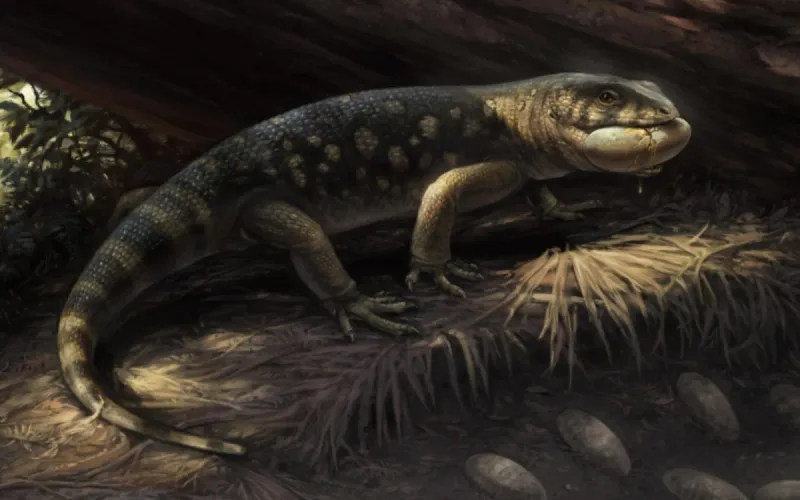
The study, published on April 20 in the journal Historical Biology, marks a historic turning point. Led by Omar Ait Haddou from Sidi Mohamed Ben Abdellah University in Fès and eight colleagues from six Moroccan institutions, the research reveals the presence of traces dating back 164 to 168 million years in the Guettioua formation, in the heart of the central High Atlas. This finding represents only the third occurrence worldwide of this type of footprint. Until now, no similar remains had ever been documented on the ancient southern supercontinent, Gondwana.
On Bladi.net : A major discovery in Morocco redefines the history of marine life
Concretely, the team analyzed a sandstone slab extracted during a prospecting campaign conducted in 2024 near the village of Msemrir. The 30-centimeter-long slab contains twelve footprints. While most are degraded, a left hand proves to be perfectly preserved. Using three-dimensional modeling software, scientists were able to determine that it measured exactly 20 millimeters. Although the sample shows strong similarities with the recognized genus Rhynchosauroides, slight differences in morphological orientation lead the authors to cautiously classify these traces as belonging to an unidentified lacertoid.
On Bladi.net : Ancient Beachside Stroll: Dinosaur Footprints Unveil Morocco’s Prehistoric Coast
This scientific breakthrough also makes it possible to reconstruct the local ecosystem, described as a dynamic river network. The addition of these lizard-like reptile traces to those already known of invertebrates or dinosaurs confirms the richness of this transition zone. "The coexistence of lizard-like reptiles and theropods in the same environment suggests possible ecological interactions," the report states, evoking a potential predator-prey dynamic. These results now encourage experts to continue systematic excavations in the region to uncover still-unknown vertebrates.