
Morocco speeds ahead at 320 km/h, while California remains at the station
Morocco has operated its high-speed train since 2018, while California is still waiting for its own. An American column contrasts Al Boraq’s results with the delays and staggering costs of the Californian rail project.
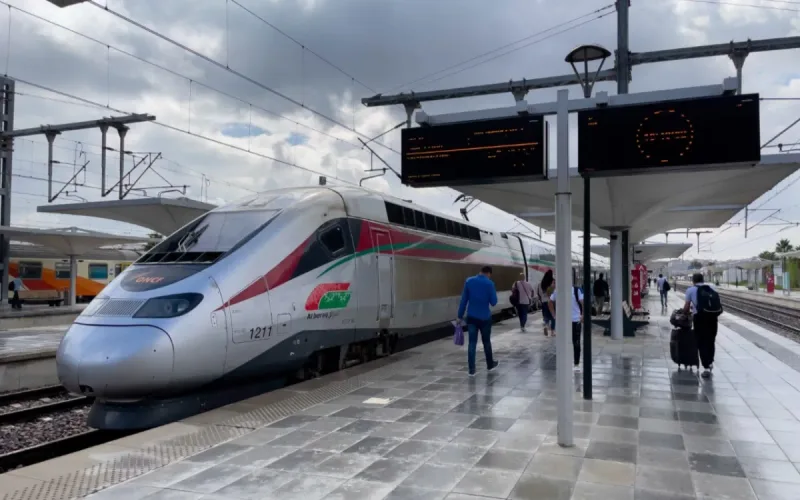
The contrast struck Joe Mathews during a journey between Casablanca and Tangier. The American columnist covered in 2 h 17 a trip that took about five hours before Al Boraq entered service.
On Bladi.net : Al Boraq (TGV): The cult show "60 Minutes" elevates Morocco as a global model
In the San Francisco Chronicle, he compares Morocco with California, two elongated territories bordered by the ocean and home to nearly 40 million inhabitants. Yet their economic power is in no way comparable: California’s economy is approaching 4,000 billion dollars, compared with approximately 182 billion for Morocco.
Despite this gap, the kingdom has had Africa’s first high-speed train since November 2018. Al Boraq links Casablanca, Rabat, Kénitra and Tangier, with speeds reaching 320 km/h on the dedicated section.
Morocco moves ahead, California waits
The columnist estimates the cost of the Moroccan line at approximately 15 million dollars per mile. The Merced–Bakersfield section, the first part of the Californian project, is approaching 35 billion dollars, or more than 200 million per mile.
The two projects are not entirely comparable, particularly regarding standards, land acquisition and administrative constraints. But the gap remains spectacular. California does not plan to bring this first section into service before 2033.
Joe Mathews attributes Morocco’s success to its partnership with SNCF and Alstom, the use of existing stations and a pragmatic choice: Al Boraq still runs on conventional tracks between Casablanca and Kénitra before joining its high-speed line toward Tangier.
California, for its part, has accumulated changes in direction, studies, legal challenges and consultants, sending the bill and the schedule soaring.
For the columnist, the main Moroccan lesson lies in the ability to quickly launch functional infrastructure, even if it is improved afterward. Eight years after Al Boraq arrived, California is still building its first high-speed train.