The myth of Mimouna: What the celebration of Judeo-Arab brotherhood hides about Moroccan history
Behind the festivities of Mimouna, a symbol of harmony between Jews and Arabs in Morocco, lies a complex history. Between cultural exchanges and past violence, this narrative of coexistence now appears as a myth that must be nuanced with honesty.
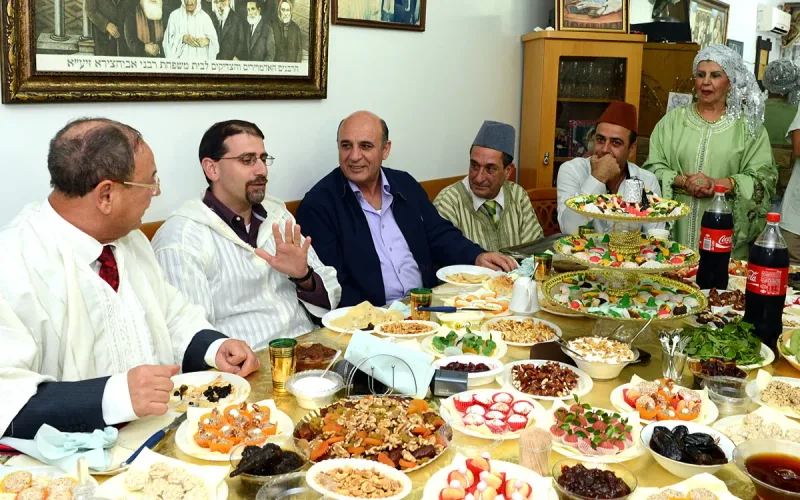
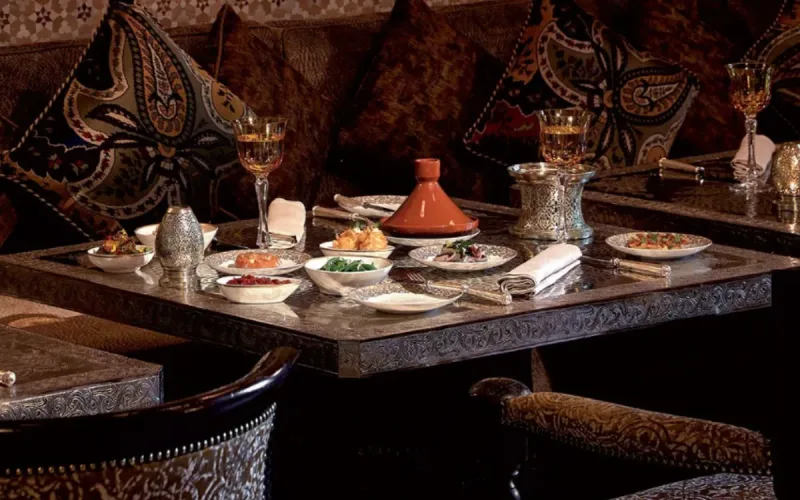
Every year, the end of the Jewish Passover is marked by Mimouna, a feast of abundance where tables groan under pastries and honey. Traditionally, Muslim neighbors would bring flour and butter to their Jewish hosts, a practical and profound gesture illustrating a centuries-old cultural symbiosis. For many observers, this celebration has become the symbol of a natural and lasting harmony in Morocco, often opposed to modern tensions. According to The Times of Israel, however, this seductive narrative tends to obscure the shadows that complicate the vision of a perfect interreligious utopia.
On Bladi.net: In Morocco, the Hamas-Israel war is affecting Jewish holidays
The history of the Moroccan Jewish community has indeed been marked by major tragedies that the popular narrative tends to relegate to footnotes. In 1033, the Banu Ifran tribe massacred more than 6,000 Jews in Fez, before a new pogrom broke out in 1465. The 18th century was also punctuated by violence, notably in 1727 during a period of instability, then in 1790 under the reign of Sultan Mulay al-Yazid, who ordered massacres in Tetouan, Marrakech or Meknes. Since the mid-15th century, the "mellah" system had imposed the confinement of Jewish populations in walled neighborhoods, making their subordinate status visible and permanent.
The security of Jews in Morocco was structurally ambiguous and dependent on the goodwill of the sovereigns. While some held positions as diplomats or royal financiers, their protection remained conditional. The famous declaration of King Mohammed V, "There are no Jews in Morocco, only Moroccan subjects," illustrates this desire for inclusion, but it also underscores that an alternative of exclusion was then conceivable. Coexistence was therefore not an absence of tensions, but a fragile relationship where human warmth could suddenly give way to violence as soon as the central authority collapsed.
On Bladi.net: "The machine is broken": The big lie of some fancy restaurants in Rabat
Rather than relying on a sometimes mythologized nostalgia, the true understanding of Mimouna lies, according to the author, in the recognition of these contrasts. The human connection during this festival is all the more remarkable as it was expressed in a world that did not guarantee it. The open doors had a precise meaning because they could have been closed. Today, the hope of lasting coexistence can only be born from a lucid reading of history, accepting both moments of brotherhood and past trials to build a future based on truth rather than myth.