
In the Netherlands, the “Moroccan of the past” is disappearing
In a Dutch garage, writer Abdelkader Benali reflects on how far he has come since his childhood in his family’s butcher shop in Rotterdam. The Moroccans he observes today work, study, plan for their children’s future and no longer sit around waiting.
The story begins with a vehicle inspection. While his car undergoes its annual test, Abdelkader Benali waits in the office of a Moroccan garage owner. The mechanic serves him a coffee. A young intern with blue eyes and an earring walks into the room. Beside a tire, a neatly folded prayer mat suddenly takes the writer forty years back, he recounts in De Kanttekening.
On Bladi.net : They were supposed to return to Morocco; six decades later, their families are still in the Netherlands
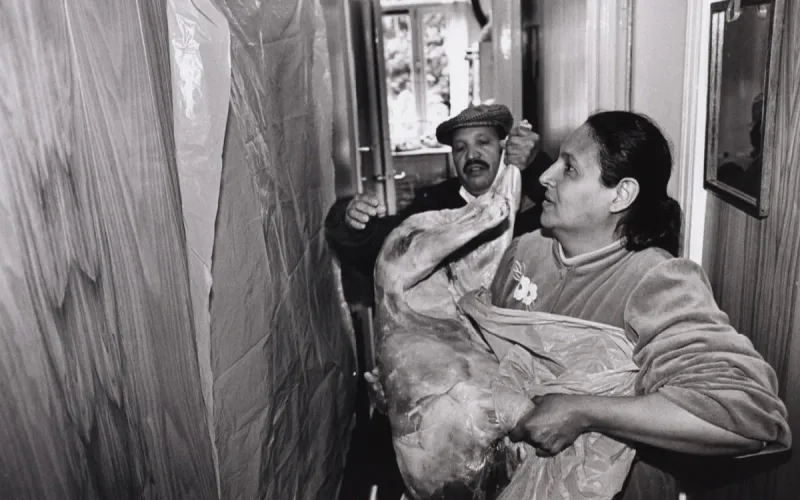
In the 1980s, Benali was 12 or 13 and sometimes minded his father’s butcher shop in Rotterdam. On Monday evenings, he would wait for his father to return, never knowing what time he would arrive. His father had gone to Brabant to get goat meat from an abattoir whose address was all he knew.
From the small office overlooking the shop, the teenager watched the hours go by. For the writer, this waiting sums up part of the lives of the first Moroccans to settle in the Netherlands: they worked, moved forward with few certainties and often had no idea what the next day held. This period also gave rise to families separated for long periods between the Netherlands and Morocco.
The garage brings back the same smell of oil and rubber, the same small staircase and almost the same office. But the Moroccans who occupy this space today are no longer the ones from his childhood. Benali believes a new phase has begun: “today’s Moroccan no longer waits.” He moves, speaks up, stands up for himself and has a clearer idea of the direction he wants to take.
Two working parents, children at university
The writer observes this transformation when he takes his children to athletics practice. On the field, dozens of children of Moroccan origin run and play together. Their parents wait on the sidelines, chat and then take them home. Some of the adults were themselves good runners when they were young.
In these families, both parents often work. The children go from school to sports, swimming, theater, tutoring or Moroccan language lessons. One father Benali meets by the track tells him he has taken up sailing in Friesland and is enjoying this new activity.
This daily life stands in contrast to the fixed image of the immigrant worker who arrived for a few years before a hypothetical return to Morocco. The younger generations study, build their careers in the Netherlands and develop forms of belonging that no longer force them to choose between their country of birth and their parents’ country.
Benali does not gloss over the difficulties. He and the garage owner also discuss Moroccans leaving for Sebta, the gap between rich and poor in Morocco and low voter turnout. The mechanic tells him about his family, settled in a small Spanish town where the Moroccan community eventually opened two mosques.
On Bladi.net : article 121420
The visit ends with one final detail. Benali had found the garage through a Moroccan friend whose son is studying urban planning at university. Between mechanics, writers, students, athletes and parents, he now sees a vast network of informal connections in which Moroccans in the Netherlands recommend places to one another, exchange favors and meet up almost naturally.