Paleontology: Morocco loses its record for the oldest chelicerate to Utah
Researchers from Harvard have discovered the fossil of Megachelicerax cousteaui in Utah, which is 500 million years old. This finding, published in March 2026, dethrones the record of precocity of chelicerates held until then by the Fezouata biota in Morocco.
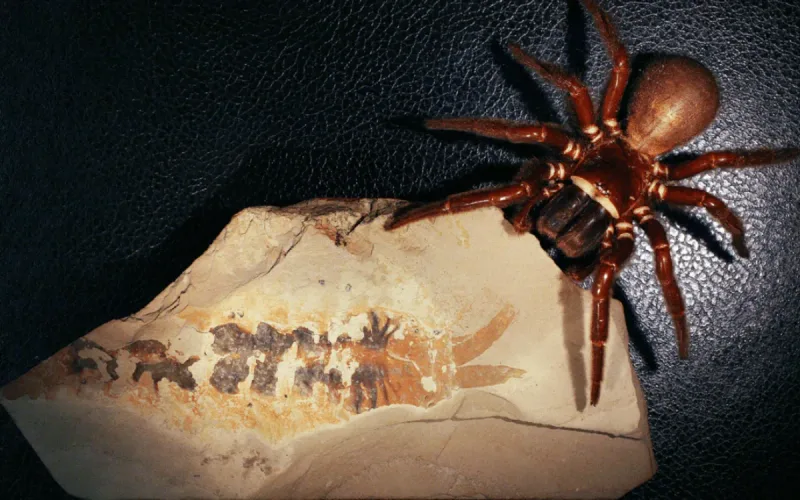
The discovery of this marine predator upsets the chronology of marine biology. Megachelicerax cousteaui indeed possesses the oldest "chelicera" (claw) ever identified in an arthropod. According to Phys.org, this anatomical characteristic defines the group including today’s spiders, scorpions and horseshoe crabs, marking a key stage in evolution.
On Bladi.net: Paleontology: An unknown herbivorous dinosaur discovered in Morocco
This study pushes back the history of this group by 20 million years. Until now, the most archaic specimens known came from the Fezouata biota, located in Morocco, and dated back about 480 million years. The new American fossil now establishes the origin of these species as early as the middle of the Cambrian, proving that their anatomical blueprint had already emerged much earlier than expected.
The analysis of the animal reveals a surprising organic complexity for its time. The specimen has a cephalic shield and nine body segments, with respiratory structures similar to the gills of modern horseshoe crabs. For researcher Rudy Lerosey-Aubril of Phys.org, this fossil shows that "the anatomy of spiders and horseshoe crabs was already emerging 500 million years ago".
On Bladi.net: Morocco: Researchers discover a giant marine scorpion 470 million years old
The fossil has been named in honor of the French explorer Jacques-Yves Cousteau. It demonstrates that sophisticated arthropods already inhabited the oceans shortly after the Cambrian explosion, a period of rapid biological innovation. The Harvard scientists emphasize the importance of museum collections that have preserved this specimen since 1981, allowing the origin of more than 120,000 living species to be rewritten today.