
Real estate in Morocco hidden during a divorce: Dutch justice takes it away from its owner
During his divorce in the Netherlands, a man denies owning a house in Morocco and claims that it belongs to his father. Land registry documents reveal two different properties. For deliberately concealing the property, he loses his entire share in favor of his ex-wife.
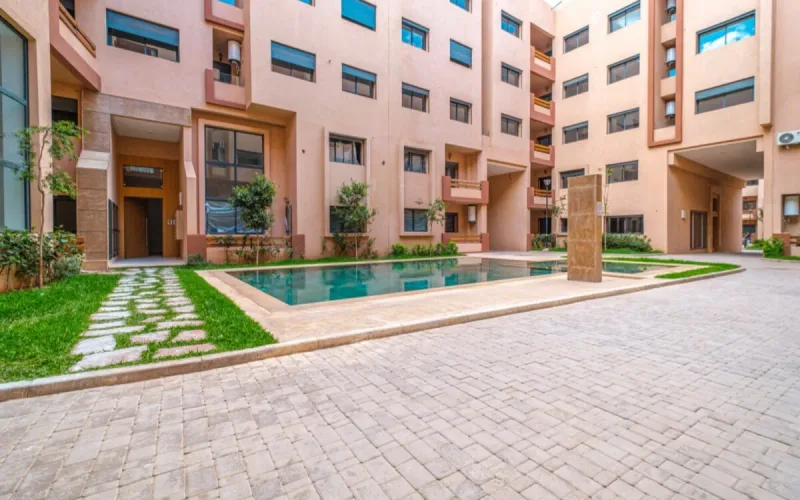
Moroccan real estate upended the division of assets of a divorced couple in the Netherlands. Married in 2002, the spouses separated after the woman filed a petition in 2023. The divorce was finalized in April 2025, but the fate of a house located in Morocco remained disputed.
The man denied owning the property. According to him, the house belonged to his father and the documents produced by his ex-wife had been fabricated. She, on the contrary, maintained that her former husband had purchased the property in 2009 and was deliberately seeking to exclude it from the division of assets.
On Bladi.net : Her apartment in Morocco is valued at 120,000 euros: she owes her ex 60,000 euros in the Netherlands
The house, whose province and address have been anonymized, is built on a 124-square-meter plot. It comprises a ground floor and an upper floor. The documents presented by the woman included a cadastral deed in Arabic, an ownership certificate in English, and two Moroccan certificates issued in 2024 and 2025.
All these documents identified the man as the owner. The cadastral deed indicated that the property had been transferred to him in full through a sale concluded in December 2009. A mortgage had also been established in favor of a regional agency of Banque Populaire.
The father’s documents turn against the son
To substantiate his version, the man produced his own cadastral extract, a sales contract, and certificates of income and non-taxation. These documents did indeed identify his father as the owner of a house in Morocco.
But the cadastral number did not correspond to that of the property discovered by his ex-wife. In its ruling of April 23, 2026, the Arnhem-Leeuwarden Court of Appeal found that the documents concerned two different properties, probably neighboring ones: one belonged to the father, while the other was registered in the son’s name.
The claim that the documents were fake was also rejected. The man provided no evidence that could cast doubt on his ex-wife’s documents, even though he himself relied on comparable Moroccan documents.
The court still had to determine which legislation applied. Moroccan rules remained applicable to land-related aspects and the procedures for transferring real estate located in the kingdom. But since the house had been purchased in 2009, when the Dutch matrimonial property regime already applied to the couple, its inclusion in the community of property depended on Dutch law.
On Bladi.net : A MRE has blocked a house in Morocco for six years; court orders her to pay 150 euros per day
The judges concluded that the man knew the house was part of the marital community and had deliberately concealed it by claiming that it belonged to his father. Dutch law, however, severely penalizes anyone who intentionally conceals community property: that person loses their own share in favor of the other spouse.
The house will therefore neither be divided nor simply valued to calculate compensation. The ex-wife becomes its sole owner, while the man loses all the rights he held over this real estate in Morocco.