
Sardines Overtake Salmon in the United States, Morocco Could Reap the Rewards
Canned sardines are enjoying spectacular success in the United States. They are now Americans’ second-favorite canned fish, behind tuna, a trend that opens up prospects for Morocco, the world’s leading sardine supplier.
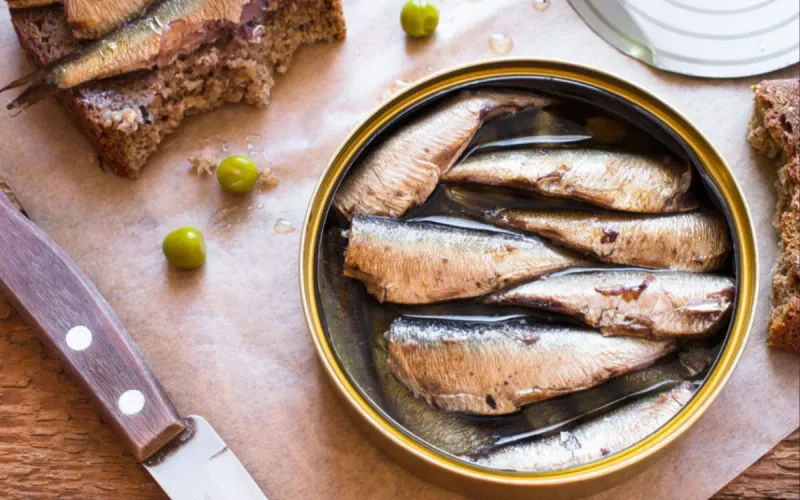
Long confined to cupboards, canned fish has become a trendy product in the United States. Restaurants, specialty grocery stores and social media are contributing to this enthusiasm, which is particularly pronounced among young consumers looking for protein-rich foods.
According to a survey published by Fortune, U.S. sales of canned fish rose from 2.3 billion dollars in 2018 to more than 2.7 billion. Over the past twelve months, American consumers spent 3.52 billion dollars on all shelf-stable seafood products.
Sardines are benefiting particularly from this phenomenon. They have now overtaken salmon to become the second most popular canned fish in the United States, behind tuna.
The phenomenon is also apparent in online orders. The 2025 Grubhub report shows that orders for canned fish tripled in one year. Purchases made at grocery stores through the platform even jumped by 209%.
On Bladi.net : France Sardine Shortage: Morocco Export Ban Sparks Supply Crisis
For Moroccan canneries, the U.S. market therefore represents a particularly attractive opportunity. Unlike frozen sardines, whose exports Morocco suspended to preserve domestic market supplies, processed and canned sardines can continue to be exported.
This particularity had already enabled canneries operating in Morocco to continue serving their foreign customers despite the restrictions decided by Rabat. In France, several industrial companies had thus adapted their supply chains by prioritizing processing directly in Morocco.
The American success comes at the wrong time
This new demand is nevertheless emerging as Morocco’s resource becomes scarcer. Fortune notes that sardine landings in Morocco fell by nearly 46% between 2022 and 2024.
They declined from approximately 966,000 tonnes in 2022 to nearly 525,000 tonnes two years later. Warming waters are being blamed in particular: sardine shoals are moving toward cooler areas, forcing fishermen to venture farther from the coast.
This decline in catches prompted Morocco to suspend frozen sardine exports as of February 2026, in order to prioritize the domestic market and the local processing industry.
On Bladi.net : Moroccan Sardines Spain Export Suspension Negotiations
This availability problem is now compounded by the cost of fishing. Rashid Sumaila, a fisheries economics specialist at the University of British Columbia interviewed by Fortune, believes that rising energy costs linked to international tensions are making fishing trips more expensive just as boats have to travel greater distances to find sardine shoals.
The structure of Moroccan exports has already changed profoundly. Sardines accounted for only 23% of frozen small pelagic exports in 2025, compared with approximately 70% in 2020. Morocco is simultaneously seeking to promote processed products, which generate more value than fish sold raw.
This strategy could correspond particularly well to the new American trend. The global canned fish market, valued at approximately 10.2 billion dollars in 2024, could approach 18 billion by 2034.
Morocco thus finds itself in a paradoxical situation: canned sardines have never seemed so attractive in the U.S. market, yet this demand is arriving precisely as its catches are declining sharply. For Moroccan canneries, the challenge will therefore be to benefit from this new customer base without increasing pressure on a resource that has become scarcer.