Undocumented in Spain: 13-Hour Days and the Moroccan Workers’ Trap
In Spain, a young person without a work permit cannot freely choose their job. They often depend on an intermediary, accept endless working days and can barely protest. The accounts of Moroccan workers reveal the other side of the dream sold before departure.
Finding work in Spain without a residence permit is not impossible. That is precisely what makes the situation dangerous. Employers and intermediaries know that some migrants will accept almost anything to eat, pay for a mattress or send a few euros to their families.
On Bladi.net : Moroccan Concierge in Spain Earns Six-Figure Salary, Outpacing Local Officials
The newcomer generally does not respond to an advertisement listing a salary, working hours and a contract. Instead, they wait for an acquaintance to call them for a day’s work in a field, on a construction site, in a kitchen or during a move. The boss can decide alone how many hours will be worked and how much will be paid.
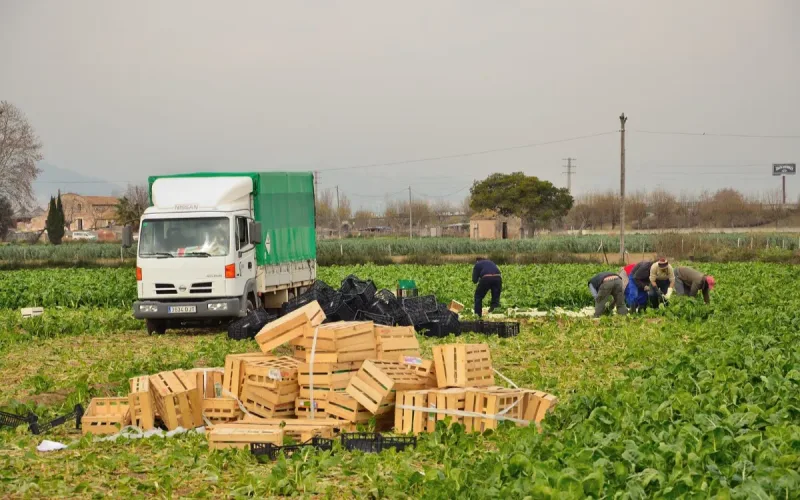
Ahmed, a 31-year-old Moroccan living in the agricultural region of Níjar, in Andalusia, described his daily life in an El País report. In the greenhouses, undocumented workers reportedly often earn five euros per hour or around 40 euros for a day that can exceed ten hours.
Some reportedly work for weeks without a break, sometimes for up to 90 consecutive days. Ahmed earned the equivalent of ten euros a day in a phone shop in Morocco. In Spain, he can receive 40 to 45 euros. But part of that money immediately disappears into inadequate housing: he paid 200 euros to share a shack with two other people.
This wage seems high when compared with what he earned in Morocco. It is much less so when measured against the cost of living in Spain, the number of hours worked and the absence of leave, accident protection or any guarantee of being paid.
The minimum wage set by Spain in 2026 reaches 40.70 euros per legal working day, or 1,221 euros per month. For a temporary worker employed for fewer than 120 days by the same company, the minimum must even reach 57.82 euros per legal working day, including paid leave and bonuses in particular.
Receiving 40 euros after ten or twelve hours of work therefore does not match the normal wage promised by videos showing European earnings. The young worker works more, without any certainty of finding the same job the next day and often without being able to prove how many hours were worked.
Thirteen hours for almost nothing
In the most serious cases, the job offered becomes a trap. In April 2026, the Guardia Civil freed 80 migrant workers exploited on farms in Castellón and Valencia.
The victims, aged between 20 and 35, had been lured by false promises of decent wages, housing and food. Once they arrived, they worked up to thirteen hours a day, with almost no rest.
The network then deducted the cost of transportation, accommodation and meals from their wages. In the end, some received almost nothing. They slept crammed into housing that sometimes lacked water or electricity. Threats, violence and their irregular status prevented them from leaving or reporting their exploiters.
Of course, not all undocumented workers experience such an extreme situation. But the absence of a work permit creates a balance of power that strongly favors the person doing the hiring. Refusing an excessively long day may mean never being called again. Demanding unpaid wages may result in losing the only contact that makes it possible to work.
Othmane Nahi’s experience shows that this insecurity can last far longer than a few months. This Moroccan worker, interviewed by El País, spent ten years following agricultural campaigns in different Spanish regions without managing to regularize his status.
After a decade of work, he was still living in accommodation provided by Cáritas in Jaén. “Having papers saves our lives,” he said, referring to the possibility of finally working legally and enjoying the same rights as other employees.
Spanish legislation nevertheless specifies that lacking authorization does not eliminate the rights of a foreign worker. An employer therefore cannot legally refuse to pay someone solely because they do not have papers.
But between having a right and managing to enforce it, the distance can be immense. It is necessary to identify the employer, prove the days worked, keep messages or testimonies and dare to contact the Labor Inspectorate while living in fear of the authorities oneself.
Undeclared work is therefore not the shortcut to easy money imagined before departure. It can mean getting up before dawn, working in the heat, receiving a few bills without a payslip and then returning to sleep in a shack, without knowing whether the boss will call the next day.
On Bladi.net : From locksmith to star mason in Spain: The Moroccan who earns 10,000 euros net per month
Spain offers genuine opportunities to those who have legal status and a contract. Without papers, the same work may mainly enrich the person who knows that their employee has almost no power to say no.