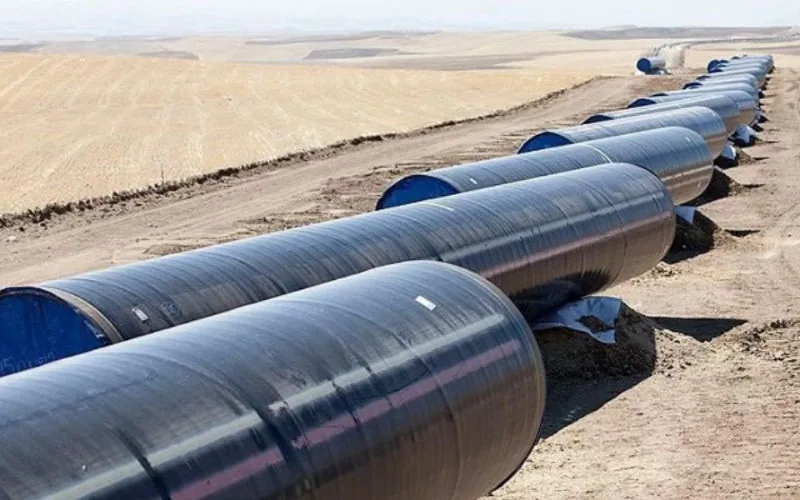
Morocco $26 billion pipeline Washington financing deal
Morocco is seeking to mobilize the US Exim Bank and the World Bank to finance the Atlantic African pipeline, estimated at $26 billion. The project is intended to connect West African gas resources to the kingdom, then to Europe.
Rabat has engaged in discussions with the Export-Import Bank of the United States, the American public agency responsible for supporting the country’s exports. The World Bank is also among the institutions approached.
On Bladi.net : New developments for the Morocco-Nigeria gas pipeline
Morocco’s ambassador to the United States, Youssef Amrani, confirmed these initiatives without specifying the amounts requested or the form their participation could take.
An Exim Bank spokesperson acknowledged the existence of preliminary discussions. The World Bank declined to comment, according to Bloomberg.
For the Moroccan diplomat, tensions over Middle Eastern energy routes strengthen the strategic interest of the project, which would offer Europe a new avenue for African gas supply.
The timeline still depends on financing
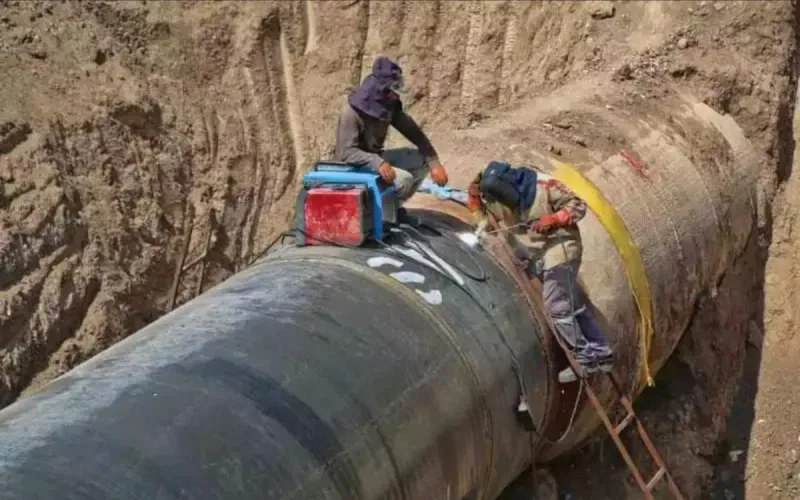
The pipeline is to run approximately 6,800 kilometers along the Atlantic coast, connecting notably Nigeria, Senegal and Mauritania. In Morocco, it is to connect to the Maghreb-Europe pipeline, linked to Spain.
Its announced capacity reaches 30 billion cubic meters of gas per year. Half would be intended for the Moroccan market, the other half potentially being transported to Europe.
Morocco would thus strengthen its energy security while becoming a major transit point between West African deposits and the European market.
On Bladi.net : New Strait of Hormuz": The Nigeria-Morocco Gas Pipeline, the Secret Weapon Against the Energy Crisis
The launch of work is envisaged in 2028, for first deliveries in 2031. This timeline remains however dependent on obtaining firm financial commitments. Exchanges with Washington and the World Bank therefore constitute a diplomatic advance, but not yet the definitive financing of the project.