Morocco Haiti World Cup: Opta reveals set-piece danger
Haiti has yet to score in this World Cup, but the Atlas Lions would be wrong to see only a harmless opponent. Days before the match against Morocco, Opta’s statistics reveal a very specific danger: balls sent into the box, crosses, corners and second balls.

Haiti’s record is fragile nonetheless. Two matches, two defeats, no goals scored. Beaten by Scotland, then by Brazil, Haiti approaches its final group match with little margin. But in terms of content, everything is not so straightforward. Against Scotland, the Haitian team attempted 15 shots, earned 4 corners and delivered 23 crosses. Figures that show a clear intention: attack down the flanks and bring the ball into the opposing box.
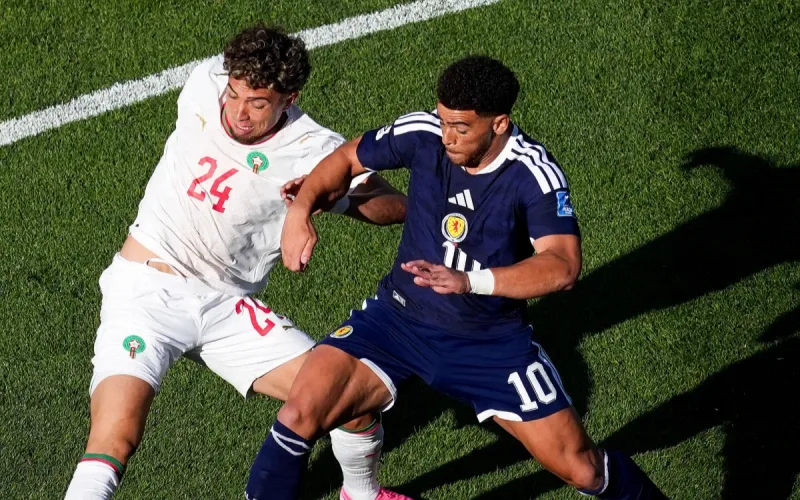
On Bladi.net : Morocco Dominates Scotland 1-0: Stats Reveal One-Sided Victory
This point must catch Morocco’s attention. The Atlas Lions remain superior on paper, but a World Cup match can quickly become complicated if the opponent multiplies set-piece situations. Haiti earned 4 corners against Brazil, then another 4 against Scotland. Eight corners in two matches for a team that hasn’t scored—that’s a paradox, but also a warning.
Morocco must therefore avoid defending too deep, conceding panicked clearances or leaving the flanks too open. Because if Haiti lacks efficiency in the final touch, it has shown it can create volume. Against Scotland, its 15 shots and "expected goals" of 1.046 indicate it genuinely came close to scoring. The problem wasn’t a total absence of chances, but the inability to convert them.
Crosses constitute the other strong signal. With 23 crosses against Scotland, Haiti clearly sought to create danger in the box. This type of play can become troublesome against a favorite team, especially if that team thinks primarily about controlling the pace or managing its efforts. A poor clearance, an avoidable corner or a second ball poorly handled can be enough to transform a controlled match into a trap.
Against Brazil, Haiti had been more limited offensively, with 7 shots and 3 on target. But it had already earned 4 corners. Against Scotland, it pushed harder, with 15 shots, 2 on target and 4 blocked shots. This confirms a team capable of pressing in sequences, even if it remains fragile in finishing.
Morocco must also be wary of the physical rhythm Haiti can impose. Opta’s statistics show a team that commits many fouls: 14 against Brazil, then 23 against Scotland. This aggression can chop up the game, break up Moroccan combinations and tip the match into a register less comfortable for the Atlas Lions.
The challenge will therefore be twofold for Morocco: impose its technical mastery, but without offering Haiti the situations it seeks. Moroccan players must avoid unnecessary fouls near the box, limit corners and maintain great concentration on crosses from the flanks.
On paper, Morocco will start as favorites. Its victory against Scotland confirmed its solidity, its ability to control the ball and limit opposing situations. But Haiti, despite its lack of goals, has shown it can produce danger differently: through volume, crosses and set pieces.
On Bladi.net : Morocco beats Scotland: British press reacts to controversial referee decisions
The Atlas Lions are warned. To avoid any nasty surprises, they must prevent Haiti from establishing this type of match. Against a team with little left to lose, the danger may not come from constructed domination, but from a corner, a cross or a poorly cleared ball.