How Moroccan couscous conquered Egypt 700 years ago
A 14th century Egyptian manuscript reveals that Moroccan couscous was already being enjoyed in Cairo during the Middle Ages. This discovery, reported by researcher Daniel Newman, testifies to the historical influence and journey of Moroccan gastronomy towards the East.
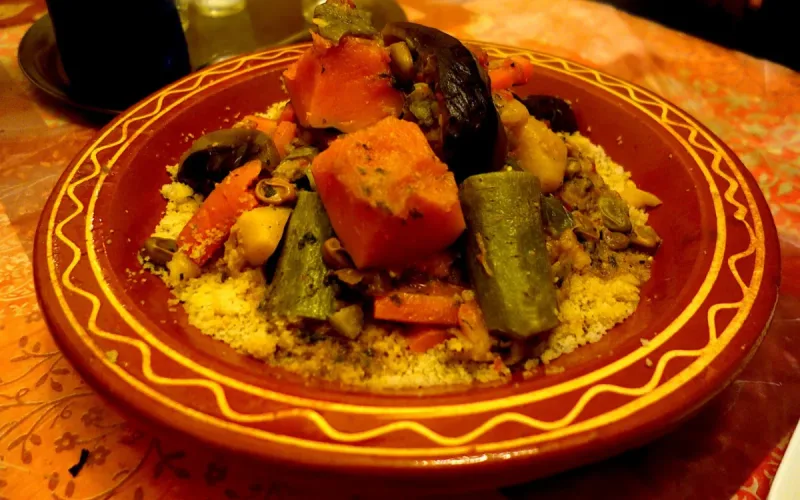
Couscous has never been static. The medieval Egyptian manuscript entitled "Kanz al-Fawa’id fi Tanwi’ al-Mawa’id" (The Treasure of Benefits and Variety at the Table) contains historical evidence of its influence as early as the 14th century. This exceptional document remains one of the most comprehensive testimonies on the eating habits of ancient Egypt.
On Bladi.net: Moroccan couscous, the official dish of NASA astronauts
According to Al Jazeera, researcher Daniel Newman identified a direct mention of "couscous in Egypt" on folio 42 of this work. For this specialist in Arab culture, this discovery perfectly illustrates the circulation of dishes between regions. He thus emphasizes that while influences often go from the East to the Maghreb, the reverse is also a historical reality.
The presence of this recipe in an Egyptian collection is not a mere curiosity. It demonstrates that the Moroccan culinary tradition was already sufficiently recognized to be documented and integrated into the writings of the East. This traveling dish was then inserted into a complex network of exchanges and cultural adaptations throughout the medieval Arab world.
On Bladi.net: Philippe Etchebest’s couscous doesn’t pass
For Morocco, this written trace adds a historical dimension to a dish that embodies deep social and family rituals. The manuscript proves that couscous was not only locally rooted, but capable of crossing borders to mark history.