Morocco High Atlas Ocean Fossils Discovery Jurassic
At over 3,000 meters altitude, the High Atlas of Morocco conceals the vestiges of an ancient deep ocean. A recent study reveals how microorganisms thrived in total darkness during the Jurassic period, overturning scientific certainties.
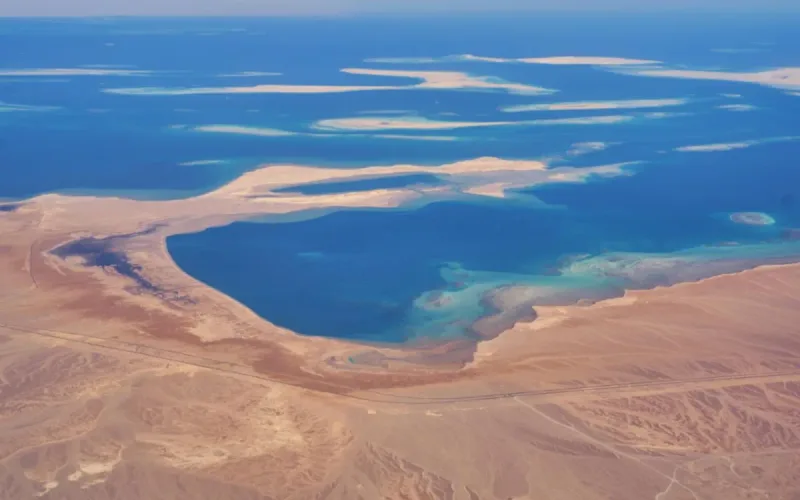
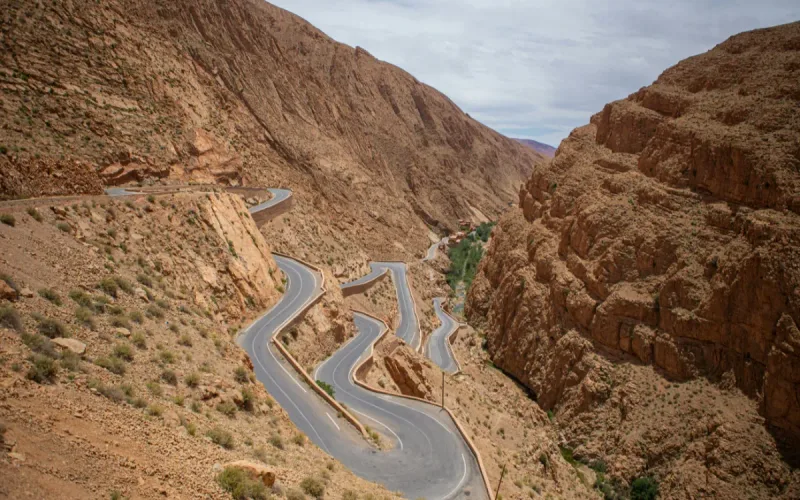
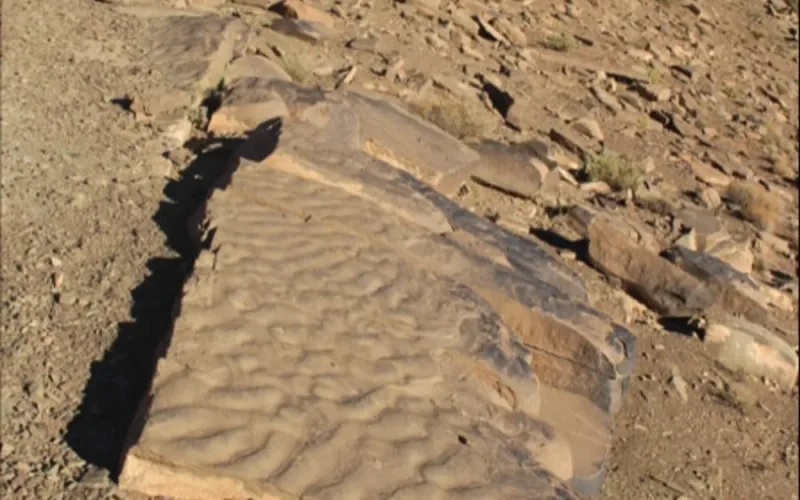
Millions of years ago, the current desert of the Tagoudite formation, located over 600 kilometers from Casablanca, was submerged beneath the waters. In this mountainous landscape now reaching over 3,000 meters in height, researchers spotted curious "wrinkled structures" on rocks dating from the Jurassic period.
On Bladi.net : Mystery in the Dadès Valley (Morocco): Researchers reveal a complex life in total darkness
These fossilized imprints, measuring from a few millimeters to several centimeters, take the form of elongated ridges and furrows with varied relief. For a long time, the scientific community believed these were traces left by photosynthesis in very shallow waters.
This theory has just been swept away by work published in the journal Geology. The team led by geobiologist Rowan Martindale demonstrated that these formations were actually located at 200 meters depth. At such a distance from the surface, the absence of light makes any photosynthesis impossible. Experts now attribute these marks to chemosynthetic organisms. These microbes derived their energy from chemical reactions, exploiting notably the sulfides in sediments to weave vast biological mats on the ocean floor.
On Bladi.net : A major discovery in Morocco redefines the history of marine life
To confirm this scenario, specialists relied on complex microscopic and chemical analyses. They detected high concentrations of carbon beneath the rock surface, direct proof of past biological activity. The arrangement of these fossils perfectly corresponds to microbial behaviors in completely dark environments. This breakthrough redefines Earth’s history and offers new insights for understanding life’s resilience in ancient extreme ecosystems, deprived of the sun’s rays.